Picture this: you’re standing over your newly seeded lawn, watching those first green shoots emerge like a delicate carpet of promise. You’ve invested weeks in soil preparation, careful seeding, and meticulous watering. Now comes the most nerve-wracking moment of all: deciding when to make that first cut. Get it wrong, and you risk tearing up tender roots or undoing all your hard work. Get it right, and you set the foundation for a lawn that will be the envy of your neighbourhood.
The timing of that first mow represents one of the most critical decisions in lawn establishment, yet many British gardeners rush this milestone with disastrous consequences. According to Royal Horticultural Society research, approximately 40% of new lawn failures result from improper first mowing practices. The difference between success and failure often comes down to understanding grass growth patterns, weather conditions, and the subtle signs that indicate readiness for cutting.
In Britain’s variable climate, where weather can shift from sunshine to showers within hours, timing becomes even more crucial. The same principles apply whether you’ve sown seed or laid turf, though the timelines differ significantly. This guide will walk you through the precise indicators that your new grass is ready for its first haircut, how to approach that initial cut, and how to establish mowing patterns that will ensure your lawn’s long-term health and beauty.
The Quick Answer
Most new grass is ready for its first cut when it reaches approximately 7-8cm in height (typically 3-4 weeks after germination for seeded lawns, or 2-3 weeks after laying for turf). The “tug test” remains the gold standard: if grass resists gently pulling, roots are established enough for mowing. Always ensure soil is moderately dry and use a sharp blade set to the highest cutting height (approximately 5cm). Never remove more than one-third of the grass blade in a single mowing session.

Understanding Grass Growth Cycles: Why Timing Matters
New grass plants undergo critical developmental phases that determine when they can withstand mowing. During the first 2-3 weeks after germination or turf laying, grasses focus energy on root establishment rather than leaf growth. Cutting too early interrupts this process, weakening plants and making them susceptible to disease, drought, and weed invasion.
The science behind this is straightforward: grass blades act as solar panels, converting sunlight into energy through photosynthesis. Removing too much leaf surface too early starves the plant of this essential energy supply. Additionally, the vibration and weight of mowers can disrupt delicate root-soil contact in newly established lawns, setting back growth by several weeks.
British weather patterns add another layer of complexity. Spring-established lawns (the most common timing for new grass) face variable conditions. The Royal Horticultural Society recommends adjusting your timeline based on actual growth rather than calendar dates, as cool, damp weather slows development while warm, sunny periods accelerate it.
The Two Key Tests: Is Your Grass Really Ready?
Before even considering mowing, perform these two simple tests to determine readiness:
The Tug Test
Grasp a handful of grass blades and give them a gentle but firm pull. If you feel resistance rather than the blades easily pulling away from the soil, roots have established sufficiently to withstand mowing. This test works equally well for both seeded lawns and new turf. For turf, wait until you can’t easily lift corners away from the soil beneath.
The Height Test
Measure your grass height in multiple areas. Most grass varieties should reach 7-8cm before first mowing. This ensures adequate leaf surface remains after cutting (remember the one-third rule). Keep a simple ruler dedicated to your garden shed for this purpose—eyeballing measurements often leads to premature cutting.

Seasonal Considerations for British Gardens
The timing of your first mow varies significantly by season:
Spring-Lawn New Grass
April to May plantings typically require 3-4 weeks to reach mowing height. Watch for rapid growth during warm spells, but resist rushing – cool nights still slow root development. Ensure all frost risk has passed before considering mowing.
Summer-Established Lawns
June to August plantings may grow faster but require more careful moisture management. Never mow during drought stress or heatwaves. Early morning or evening mowing reduces stress on new grass.
Autumn New Grass
September plantings grow more slowly but often establish stronger root systems. You may need 4-5 weeks before the first mowing. Ensure you mow at least 2-3 times before winter dormancy to encourage thickening.
The First Mowing: Step-by-Step Best Practices
Preparation Is Everything
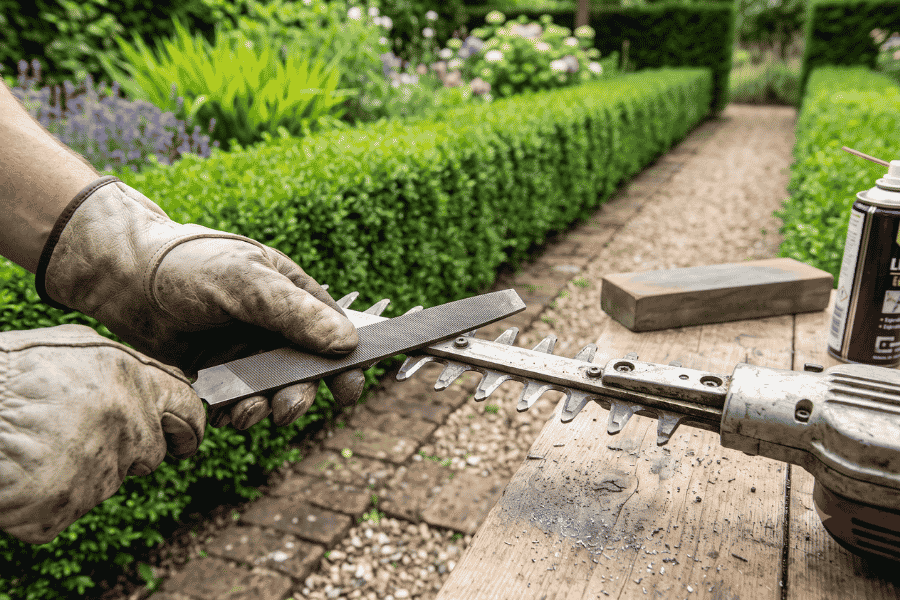
Ensure your mower blades are professionally sharpened. Dull blades tear rather than cut grass, leaving ragged edges that invite disease. Compass Garden Machinery offers blade sharpening services that ensure perfect cutting edges for this critical first mow.
Set your mower to its highest setting (typically around 5cm). For most British lawns, this means removing only 1-2cm of growth on the first pass. Ensure the soil is moderately dry – mowing on wet soil can cause rutting and root disturbance.
The Initial Cutting Technique
Mow in a single direction rather than overlapping patterns for the first cut. This reduces stress on tender grass plants. Collect clippings rather than mulching to prevent smothering new grass. Make sure your mower’s collection box is empty beforehand to ensure efficient operation.
Post-Mow Care
After mowing, water lightly if conditions are dry. Avoid fertilising for at least one week after the first cut to prevent burning tender growth. Monitor for any signs of stress (yellowing or wilting) over the following 48 hours.

Common First-Mowing Mistakes to Avoid
Cutting Too Short
Scalping new grass remains the most common error. Never remove more than one-third of the leaf surface in a single mowing. Cutting too low reduces photosynthetic capacity and exposes soil to weed seeds.
Mowing When Wet
Wet grass clumps poorly and tears easily. Furthermore, mower weight can compact damp soil, damaging delicate root systems. Always wait until the surface is dry to the touch, even if this means delaying mowing by a day or two.
Using Dull Blades
Torn grass blades lose moisture faster and provide entry points for disease. If you notice a white cast or ragged edges after mowing, immediately stop and sharpen your blades. Compass Garden Machinery’s professional servicing can prevent this issue.
Rushing Subsequent Mows
While the first mow stimulates thickening, subsequent mowing should follow the same one-third rule. Gradually reduce height over several mowing sessions rather than making dramatic adjustments.
Special Considerations for Different Grass Types
Ryegrass Blends
Common in many British lawn seed mixes, ryegrass establishes quickly and tolerates earlier mowing (sometimes as early as 2-3 weeks). However, still wait until it reaches the recommended height.
Fescue Varieties
Slower to establish but finer-textured, fescues require extra patience. Wait until they reach the upper end of the height recommendation (8cm) before first mowing.
Bentgrass
Typically found in golf courses and bowling greens, bentgrass requires more frequent but very light mowing once established. For home lawns, treat similarly to fescues.
When to Call the Professionals
If your new lawn shows patchy establishment, significant weed intrusion, or poor growth after mowing, consider professional assessment.
For large properties or particularly valuable new lawns, professional initial mowing services ensure perfect technique and equipment calibration. This investment often pays dividends in long-term lawn health and appearance.
Establishing a Long-Term Mowing Routine
After the successful first cut, establish a regular mowing pattern that maintains optimal grass health:
Mow frequently enough to never remove more than one-third of growth
Alternate mowing directions to prevent grain development
Adjust height seasonally: slightly higher in summer heat, lower in spring and autumn
Keep blades sharp throughout the mowing season
Leave clippings on the lawn after the first few mows (once established) to return nutrients
Conclusion
The first mowing of new grass represents a pivotal moment in your lawn’s life. By waiting until the right time, using proper technique, and avoiding common mistakes, you set the foundation for years of beautiful, healthy grass. Remember that good lawn care is a marathon, not a sprint – the extra week you wait for proper establishment will pay dividends for seasons to come.
British weather may test your patience, but by following these guidelines and using quality equipment from Compass Garden Machinery, you’ll achieve the lush, green carpet that makes all the effort worthwhile. Your perfect lawn awaits – just give it the time and care it deserves before that first satisfying cut.