
Petrol Leaf Blowers
For clearing large gardens and grounds, petrol leaf blowers are still the benchmark. Battery models have come a long way, but a petrol engine shifts wet, heavy leaves better and keeps going for as long as you have fuel, with no waiting for a battery to charge.
Clearing an acre or more? Our backpack leaf blowers move far more air and are easier on your arms over a long session.
Showing all 8 resultsSorted by popularity
Blowers & Blower-Vacuums, Petrol Leaf Blowers
Original price was: £166.90.£89.95Current price is: £89.95.Add to basketBlowers & Blower-Vacuums, Petrol Leaf Blowers
Original price was: £194.36.£99.95Current price is: £99.95.Add to basketBlowers & Blower-Vacuums, Petrol Leaf Blowers
Original price was: £269.00.£224.17Current price is: £224.17.Get notifiedBlowers & Blower-Vacuums, Petrol Leaf Blowers
Original price was: £329.00.£265.00Current price is: £265.00.Get notifiedBlowers & Blower-Vacuums, Petrol Leaf Blowers
Original price was: £309.00.£259.00Current price is: £259.00.Get notifiedBlowers & Blower-Vacuums, Petrol Leaf Blowers
Original price was: £550.00.£475.00Current price is: £475.00.Add to basketBlowers & Blower-Vacuums, Petrol Leaf Blowers
Original price was: £219.00.£209.00Current price is: £209.00.Get notifiedBlowers & Blower-Vacuums, Petrol Leaf Blowers
Original price was: £249.00.£199.00Current price is: £199.00.Add to basket

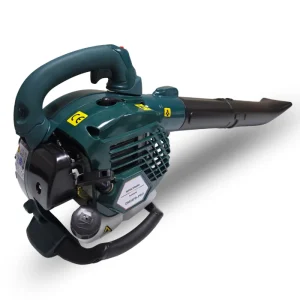
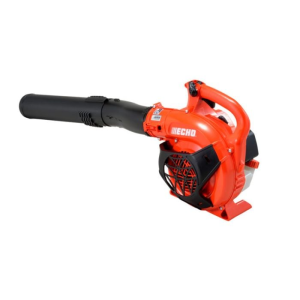
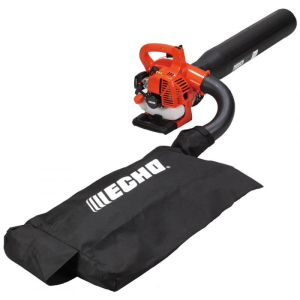
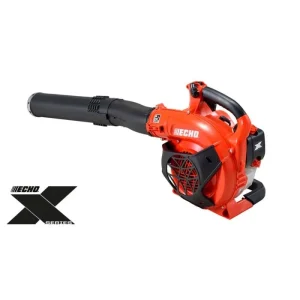

Showing all 8 resultsSorted by popularity
A Buyer’s Guide to Petrol Leaf Blowers
Picking the right petrol blower comes down to three things: the engine, whether you want handheld or backpack, and how much air it moves. Here's what to look at, plus the one maintenance habit that saves most repair bills.
1. 2-stroke or 4-stroke engine
Most handheld and backpack blowers use a 2-stroke engine. They're lighter and cheaper, with a better power-to-weight ratio, but you have to mix petrol with 2-stroke oil (usually 50:1) and they're noisier, with more exhaust fumes.
A 4-stroke engine works like a car engine, with the petrol and oil kept separate. There's no mixing, it runs quieter and cleaner, but it's heavier and costs more up front. The Honda HHB 25 E is the 4-stroke handheld in our range, and a good choice if you'd rather not deal with fuel mixing.
2. Handheld or backpack
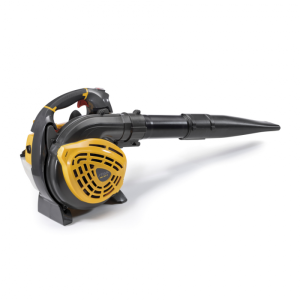
Handheld blowers suit gardens up to around half an acre, driveways, paths and tidying round flower beds. Most weigh 4–5.5kg. The Echo PB-2520 is a dependable all-rounder, and the Spectrum DM26PB-Pro keeps the cost down. If you'd rather collect leaves than blow them into a pile, the Stiga BL 530 V and Spectrum DM26PBV double as leaf vacuums.
Backpack blowers are for an acre or more, heavy leaf fall and professional grounds care. The weight sits on your back and shoulders rather than your arms, so you can work for hours. In our backpack range, the Echo PB-580 suits large gardens, the PB-8010 is built for daily professional use, and the Racing 52BPB-2 is the budget option.
3. Air volume and air speed
Two figures tell you most of what you need to know when comparing blowers:
- Air volume (CFM, or m³/h on some spec sheets) is how much air it moves. A high figure, 600 CFM or more, is what lets a backpack blower push a whole bank of dry leaves.
- Air speed (MPH, or m/s) is how fast that air leaves the tube. Around 200 MPH or more is what lifts wet, matted leaves and grit off paving.
4. Features worth having
Spring-assisted easy-start systems take much of the effort out of pull-starting. Anti-vibration mounts matter on any petrol machine you'll use for long sessions, as they reduce numbness in the hands. A cruise control lever locks the throttle, so you're not squeezing the trigger the whole time, and a translucent fuel tank lets you check the level without opening the cap.
5. Use fresh fuel
Stale fuel is one of the most common reasons a petrol blower won't start. Today's E10 petrol absorbs moisture and can start to go off within about a month, which gums up small carburettors. Add a fuel stabiliser if you won't get through a tank quickly, and consider pre-mixed alkylate fuel for the last run before winter, as it keeps for much longer.