That distinctive roar as your chainsaw bites into wood is a sound of power and productivity. Whether you’re tackling storm damage, pruning branches, or cutting logs for the fire, a sharp chain makes the job satisfying and swift. But chainsaw chains don’t last forever. With every cut, the razor-sharp teeth gradually lose their edge, transforming from efficient wood-slicers into blunt, struggling scrapers.
It happens subtly. One day you notice the saw isn’t pulling itself through the wood quite like it used to. Maybe you’re leaning on it harder, or the cuts are looking rougher. It’s easy to ignore these early signs, putting off maintenance for “just one more cut.” But pushing a worn chain is more than just inefficient – it significantly increases the risk of dangerous kickback and puts undue strain on your saw’s engine and drive components.
Knowing the unmistakable signs that your chain is worn out – beyond just feeling a bit blunt – is crucial for every responsible chainsaw owner. Recognising these signals means you can sharpen it promptly or replace it before it becomes a safety hazard or damages your valuable tool. Let’s look at the clear visual clues and performance changes that shout, “It’s time for attention!”
Why Running a Dull Chain is a Bad Idea
Using a chainsaw with a worn-out chain isn’t just frustrating; it has serious consequences. Firstly, safety is the paramount concern. A dull chain is the primary cause of kickback, that violent and unpredictable upward thrust of the guide bar towards the operator. This happens because the blunt teeth can’t bite cleanly, causing the saw to stall momentarily before suddenly grabbing and jerking upwards with immense force. It’s a leading cause of chainsaw accidents.
Secondly, performance and effort plummet. Instead of the chain slicing effortlessly through the wood, you’ll find yourself wrestling the saw, applying excessive downward pressure. This leads to rapid operator fatigue and produces ragged, splintered cuts rather than clean slices. You’ll also notice the sawdust changes from satisfying coarse chips to a fine, powdery dust – a sure sign the chain is rubbing, not cutting.
Finally, your saw itself suffers. A dull chain generates intense friction and heat. This heat transfers directly to the guide bar and the saw’s motor, accelerating wear on critical components like the drive sprocket and clutch. The engine has to work much harder, guzzling more fuel or draining batteries faster. Ultimately, forcing a worn chain costs more in repairs and replacements than maintaining a sharp one.
The Visual Clues: Inspecting Your Chain
Before you even pull the starter cord, a close inspection of the chain can reveal a lot about its condition. Always disconnect the spark plug (petrol) or remove the battery (cordless) before handling the chain for safety.
Hooked or Rounded Cutting Teeth
The most obvious sign of wear is the loss of the sharp, hooked profile on the top of the cutting teeth. A sharp tooth has a distinct point and a deep, curved gullet in front of it. As it dulls, this point rounds over and the gullet becomes shallower. Compare the teeth to a new chain or a picture of a sharp one – if the tops look blunt and rounded instead of sharply pointed, it’s significantly worn.
Uneven Tooth Height
Look along the entire length of the chain. Are all the cutting teeth roughly the same height? If some teeth are noticeably shorter than others, it indicates uneven sharpening or wear. This imbalance causes the saw to cut in a curve (pulling to one side), making straight cuts difficult and increasing wear on the bar and chain.
Damaged or Worn Depth Gauges (Rakers)
Those small, forward-facing bumps just in front of each cutter tooth are the depth gauges (often called rakers). They are absolutely critical. Their job is to control how deeply the cutting tooth bites into the wood. If these are chipped, broken, or worn down too low, the cutter teeth will take too aggressive a bite.
This dramatically increases the risk of severe kickback and makes the saw incredibly hard to control. Conversely, depth gauges filed too high (often accidentally during sharpening) prevent the cutter teeth from biting effectively, leading to poor cutting performance.
Stretched Drive Links
Over time and with heat from friction, the chain metal stretches. Examine the drive links (the part that sits in the bar groove). If the chain feels persistently loose even after correct tensioning, or if the drive links show significant wear, flattening, or hooking at the edges where they contact the bar, the chain is likely stretched beyond reliable use. Severely stretched chains are prone to derailing.

Performance Signs: Listening and Feeling the Struggle
Often, the clearest indication of a worn chain comes from how the saw behaves when you’re actually using it. Pay close attention to these performance changes:
Fine Sawdust Instead of Coarse Chips
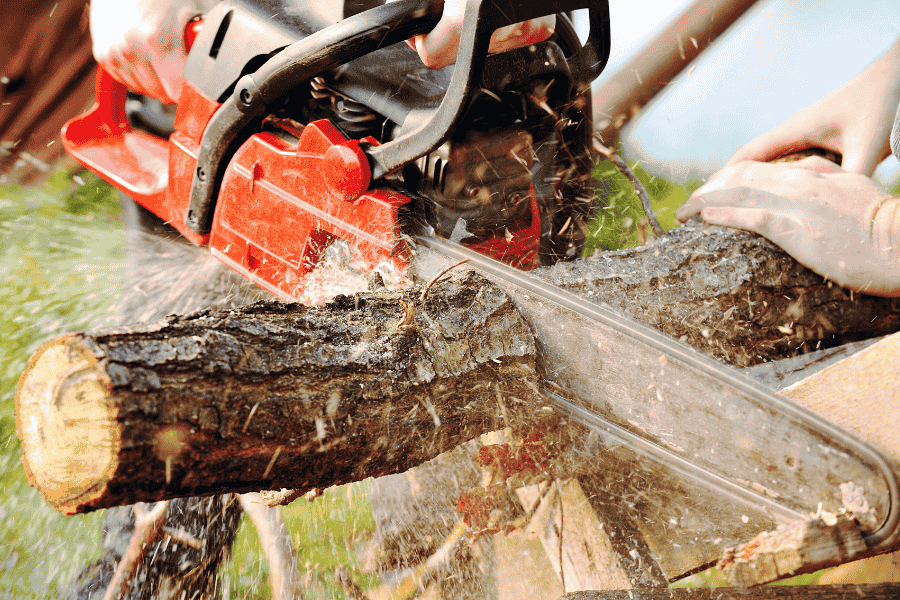
This is a classic giveaway. A sharp chain shears off clean chunks of wood, producing coarse, curly chips that fly out of the cut. A dull chain merely pulverises the wood, resulting in fine, powdery sawdust collecting around the cut or blowing out as dust. If your work area looks like it’s been sprinkled with ground coffee instead of wood chips, your chain is blunt.
Excessive Force Required
Does using the saw feel like a wrestling match? Are you constantly leaning hard on it to make progress? A sharp chain should pull itself into the cut with minimal downward pressure from you. If you’re straining and pushing constantly, the chain has lost its edge.
Burning Smell or Smoke
Excessive friction from a dull chain generates significant heat. This often manifests as smoke coming from the guide bar groove or the chain itself, even if the chain oiler is functioning correctly. You might also notice a distinct burning smell from the wood or the chain/bar. This heat is damaging your equipment.
Cutting in a Curve
As mentioned earlier, uneven tooth height causes the saw to veer persistently to one side, no matter how hard you try to steer it straight. This “wandering” makes precision cuts impossible and is a clear sign of uneven wear or damage.
Increased Vibration
While chainsaws naturally vibrate, a severely worn, damaged, or unbalanced chain will often cause a noticeable increase in harsh vibration. This isn’t just uncomfortable; it signals significant stress and imbalance within the cutting system.

When to Sharpen and When to Replace
Not all wear means the chain is finished. Regular sharpening is part of routine maintenance and can extend its life considerably. Sharpen your chain whenever you notice a drop in cutting performance (fine dust, needing more pressure) or if a visual inspection shows the teeth are simply dull but still have plenty of material and a defined shape.
However, there comes a point when replacement is the only safe and sensible option. Replace the chain if you see broken, cracked, or severely chipped cutting teeth. Replace it if the teeth are worn down so short that sharpening them properly is impossible, or if they are uneven beyond practical correction. Crucially, replace the chain immediately if the depth gauges are worn down significantly low – this is a major safety hazard due to extreme kickback risk. A chain that is badly stretched, causing constant derailing or tensioning issues, also needs replacing, as do chains where the drive links are excessively worn or damaged.
Conclusion
Recognising a worn-out chainsaw chain is non-negotiable for safe and effective operation. It protects you from the dangers of kickback, saves you from unnecessary exertion, preserves the quality of your work, and extends the life of your valuable saw. Pay attention to the visual cues – the loss of sharp hooks, uneven teeth, damaged depth gauges, and stretched links. Listen and feel for the performance warnings – fine dust, excessive force, smoking, wandering cuts, and harsh vibration.
Regular sharpening with the right tools and technique is key to maintaining peak performance. But know when the battle is lost and the chain needs retiring. Starting a job with a fresh, properly sharpened chain transforms the experience: cuts are faster, straighter, safer, and far less taxing on both you and your machine. Keep your chain sharp, know when it’s worn out, and enjoy the power of your chainsaw safely for years to come.