As the autumn leaves begin to fall and the grass stops growing, the mowing season in the UK officially draws to a close. For many gardeners, it is tempting to simply park the tractor in the back of the shed, turn off the key, and forget about it until the spring. However, if you own a premium garden tractor, treating it this way is a guaranteed recipe for expensive repair bills.
Cold weather, damp air, and stagnant fuel are the natural enemies of garden machinery. If left untreated over the winter months, your mower can suffer from rusted cutting decks, dead batteries, and clogged carburettors.
At Compass GM, we service thousands of machines every year, and we see firsthand the damage caused by improper winter storage. If you have invested in one of the fantastic Ride-On Mowers from the Stiga lineup, you want to ensure it starts on the first turn of the key next April. Here is our comprehensive, step-by-step guide on how to properly winterise and store your Stiga ride-on mower.
The Quick Answer
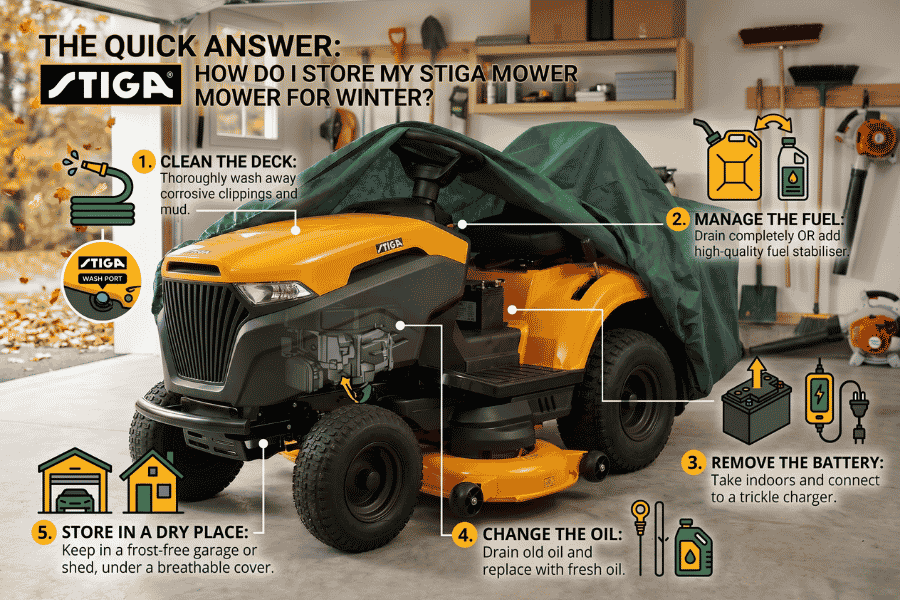
How do I store my Stiga ride-on mower for winter? To safely store your mower for the off-season, you must perform five critical maintenance steps:
Clean the Deck: Thoroughly wash away all corrosive grass clippings and mud.
Manage the Fuel: Either drain the petrol tank completely or add a high-quality fuel stabiliser to prevent E10 fuel degradation.
Remove the Battery: Take the battery indoors and connect it to a trickle charger.
Change the Oil: Drain the old, contaminated oil and replace it with fresh oil to prevent internal engine corrosion.
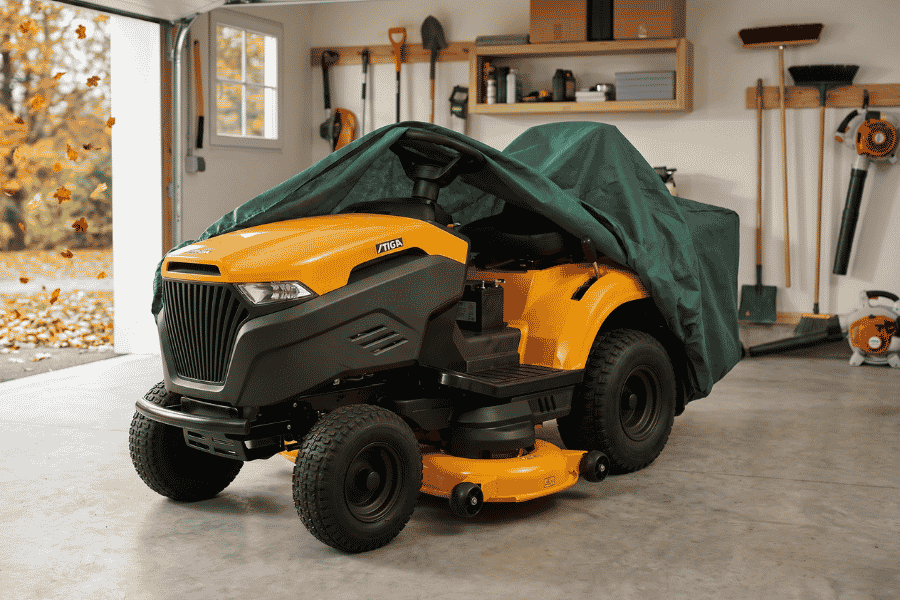
Store in a Dry Place: Keep the mower in a dry, frost-free garage or shed, covered with a breathable tarpaulin.
1. The Deep Clean: Protecting the Cutting Deck
Throughout the summer, your mower’s cutting deck acts like a vacuum, sucking up grass, acidic plant matter, and damp soil. This debris cakes onto the underside of the steel deck. If left there over the winter, the moisture trapped within the grass clippings will aggressively attack the paint and steel, leading to severe rust and eventual deck rot.
Before putting your machine away, it requires a meticulous deep clean.
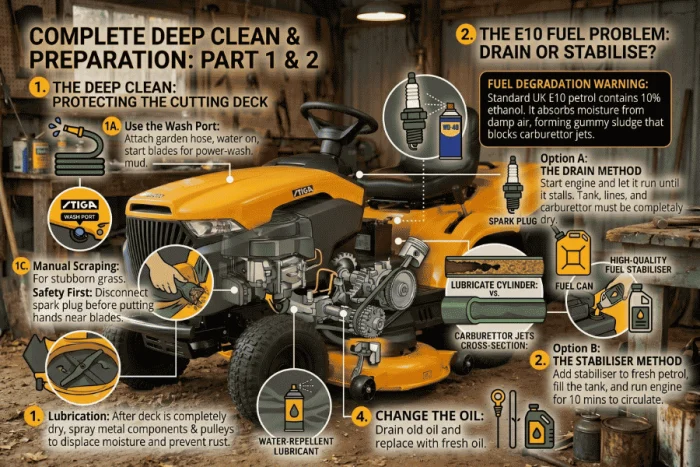
Use the Wash Port: Many modern Stiga tractors feature a handy deck wash port. Attach your garden hose, turn the water on, start the blades, and let the spinning action power-wash the underside.
Manual Scraping: For stubborn, dried-on grass, you will need to manually scrape the deck. Safety First: Always disconnect the spark plug lead before putting your hands anywhere near the mower blades. Use a plastic scraper (to avoid scratching the paint) to remove all compacted debris.
Lubrication: Once the deck is completely dry, spray a light coating of a water-repellent lubricant (like WD-40 or a dedicated deck spray) over the bare metal components and pulleys to displace moisture and prevent surface rust.
2. The E10 Fuel Problem: Drain or Stabilise?
This is arguably the most important step in winterising any piece of petrol garden machinery. Standard UK unleaded petrol now contains up to 10% ethanol (E10). Ethanol is highly hygroscopic, meaning it actively absorbs moisture from the damp winter air.
If you leave untreated E10 petrol sitting in your mower’s tank and carburettor for four months, the fuel will degrade. The ethanol and water will separate, sinking to the bottom of the tank and forming a corrosive, gummy sludge that will completely block the microscopic jets in the carburettor. Come spring, the mower simply will not start.
You have two choices for your Petrol Lawnmowers and tractors:
Option A: The Drain Method (Recommended for long storage). Start the engine and let it run until it completely runs out of fuel and stalls. This ensures the tank, fuel lines, and carburettor are bone dry.
Option B: The Stabiliser Method. If you want to keep the tank full (which prevents internal condensation from forming on the tank walls), buy a high-quality fuel stabiliser. Add it to fresh petrol, fill the tank, and run the engine for ten minutes so the treated fuel circulates all the way through the carburettor.
3. Battery Maintenance: Defeating the Frost
Lead-acid and even modern lithium-ion batteries hate freezing temperatures. If you leave the battery connected to your Stiga tractor in a freezing, unheated shed from November to March, it will likely suffer a deep discharge from which it cannot recover. You will be forced to buy a costly replacement in the spring.
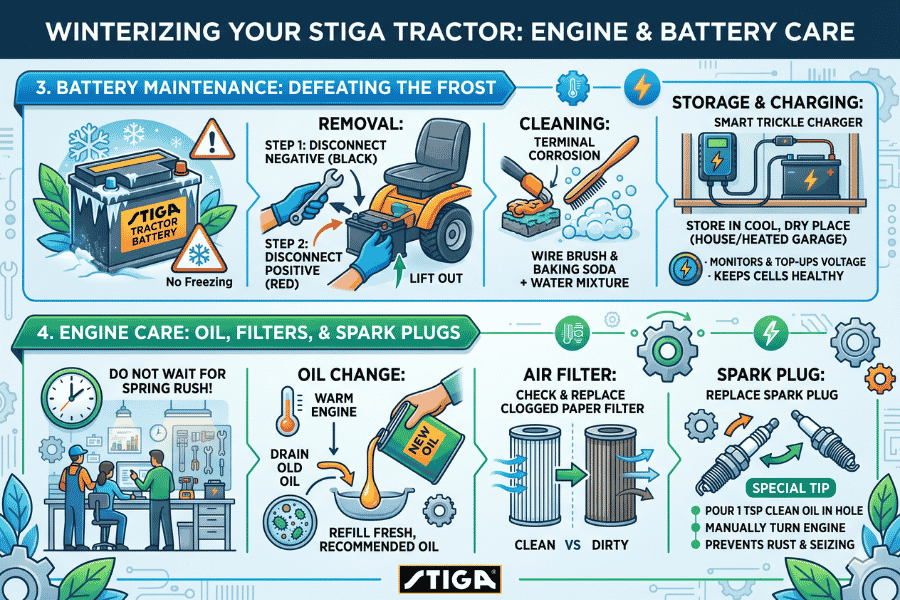
Removal: Locate the battery (usually under the seat or the bonnet), disconnect the negative (black) terminal first, followed by the positive (red) terminal, and lift it out.
Cleaning: Wipe away any white corrosion on the terminals using a wire brush and a mixture of baking soda and water.
Storage and Charging: Store the battery in a cool, dry place inside your house or a heated garage. Ideally, connect it to a “smart” trickle charger. These chargers monitor the battery’s voltage and provide a gentle top-up only when needed, keeping the cells perfectly healthy all winter.
4. Engine Care: Oil, Filters, and Spark Plugs
Winter is the perfect time to perform your annual engine service. Do not wait until the spring rush when every repair shop in the country is fully booked.
Oil Change: Used engine oil contains microscopic metal shavings, acids, and combustion byproducts. If left sitting in the engine block all winter, these contaminants can etch the internal components. Run the engine for a few minutes to warm the oil, drain it completely, and refill it with fresh, manufacturer-recommended oil.
Air Filter: Check the paper air filter. If it is clogged with summer dust, replace it. A clean filter ensures the engine breathes easily and runs efficiently.
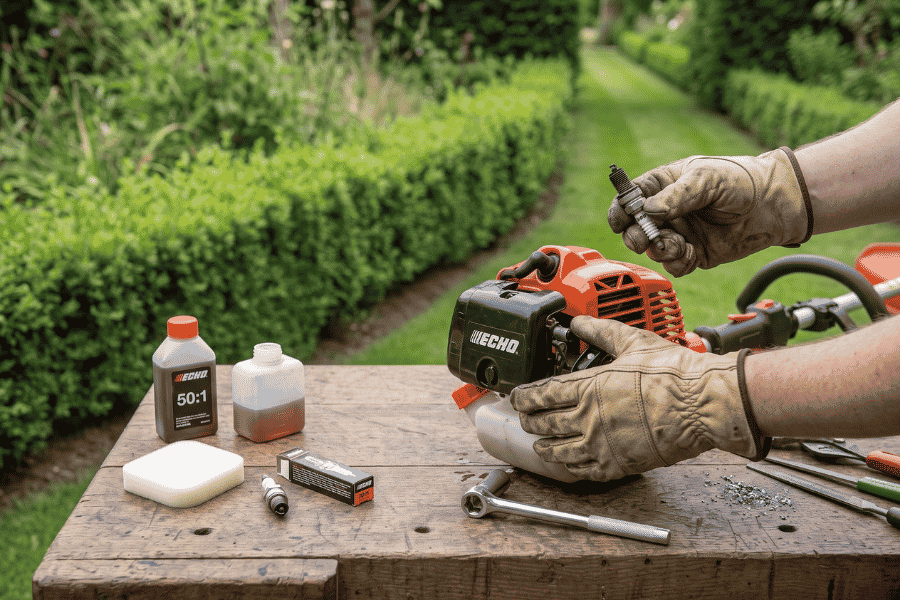
Spark Plug: Remove the old spark plug and replace it. While the plug is removed, pour a single teaspoon of clean engine oil directly down the spark plug hole. Manually turn the engine over a few times to distribute the oil, coating the cylinder walls. This prevents the piston rings from seizing or rusting over the winter. Reinstall the new spark plug.
5. Tyres and the Storage Environment
Finally, how and where you park the machine matters just as much as the mechanical preparation.
Tyre Pressure: Inflate all four tyres to the correct pressure (check your Stiga manual). As temperatures drop, tyre pressure naturally decreases. Sitting on flat, deflated tyres for months can cause permanent flat spots or crack the rubber sidewalls.
The Environment: Park the tractor in a dry, well-ventilated, frost-free environment.
Cover It Up: Even inside a shed, dust and moisture will settle on the machine. Cover your mower with a breathable tarpaulin or a dedicated tractor cover. Never use a cheap plastic sheet, as this will trap condensation underneath and accelerate rusting.
Conclusion
Your Stiga ride-on mower is a substantial investment, engineered to provide years of effortless, professional-quality cutting. By dedicating just a couple of hours in the late autumn to properly winterise the machine, you are protecting that investment. You eliminate the frustration of spring starting issues, extend the lifespan of the engine, and ensure that when the grass starts growing again, your Lawnmower is ready to go to work immediately.
If you prefer to leave the maintenance to the professionals, or if you need to order genuine Stiga service kits, belts, or replacement blades ahead of the new season, the team at Compass GM is here to help.