When shopping for a new petrol lawnmower or garden tractor, the first thing most savvy buyers check is the engine. For decades, the conventional wisdom in the gardening world was simple: look for a machine powered by a Honda or a Briggs & Stratton engine, and you could not go wrong. However, if you have browsed a machinery catalogue recently, you will have noticed a massive shift. Many of the top-tier lawnmowers on the market today are now proudly sporting engines branded by the lawnmower manufacturers themselves.
One of the most prominent names driving this change is Stiga. As one of the largest garden machinery conglomerates in Europe, they now power hundreds of thousands of machines across the continent with their own proprietary engines. But for the traditional British gardener, a vital question remains: without the familiar third-party badges on the engine block, are Stiga engines actually any good?
At Compass GM, we service, sell, and test machinery every single day. We see exactly how these engines perform straight out of the box and, more importantly, how they hold up after five years of hard domestic use. If you are considering investing in a Stiga-powered machine, here is our comprehensive, in-depth review of their engine technology, reliability, and overall value.
The Quick Answer
Are Stiga engines reliable? Yes, Stiga engines are exceptionally good, highly reliable, and represent fantastic value for money. Built to rigorous European standards, they utilise modern Overhead Valve (OHV) technology to deliver excellent fuel efficiency, reduced emissions, and easy starting. Because Stiga builds the engine specifically for the mower it sits on, they achieve a level of seamless integration that third-party engines often lack. They are a robust, durable, and cost-effective alternative to the traditional premium engine brands.

1. The Heritage and Pedigree of the Stiga Group
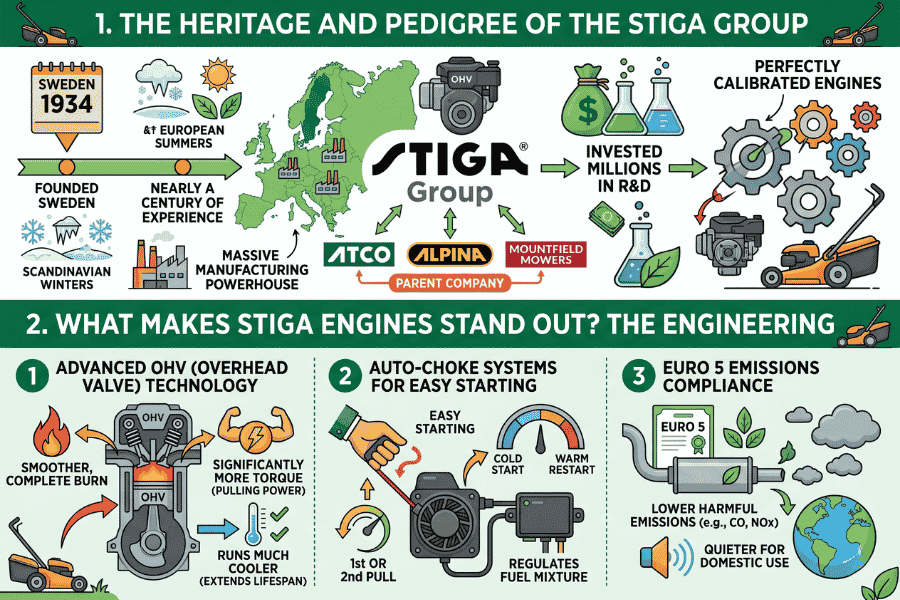
To understand the quality of a Stiga engine, you must first understand the company behind it. Stiga is not a new, unproven brand importing cheap, generic parts. Founded in Sweden in 1934, Stiga has almost a century of experience in engineering high-quality outdoor equipment designed to withstand the harsh, demanding conditions of Scandinavian winters and European summers.
Today, the Stiga Group is a massive European manufacturing powerhouse. They do not just build machinery under the Stiga name; they are the parent company and the engineering brain behind several other iconic British and European brands, including Atco, Alpina, and the legendary Mountfield Mowers.
When Stiga decided to start producing its own engines, it did not cut corners. They invested millions into state-of-the-art research and development facilities to create a line of engines that could rival the established industry giants. Their goal was to take full control of the manufacturing process, ensuring that the engine on the deck was perfectly calibrated for the specific weight, blade size, and cutting requirements of the mower it was attached to.
2. What Makes Stiga Engines Stand Out? The Engineering
So, what is actually under the cowling of a modern Stiga engine? The engineering team focused on three core pillars when designing these power plants: starting reliability, thermal efficiency, and environmental compliance.
Advanced OHV (Overhead Valve) Technology
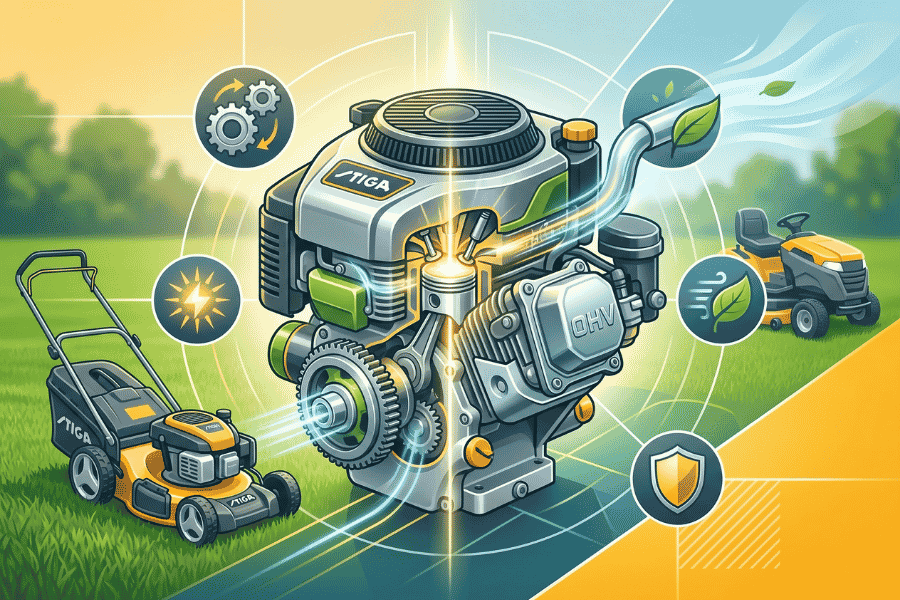
Almost all modern Stiga engines utilise an OHV design. Older lawnmower engines used a “side-valve” configuration, which was simple but highly inefficient. By moving the valves directly over the combustion chamber, Stiga engines achieve a much smoother, more complete burn of the fuel-air mixture. This results in significantly more torque (pulling power) from a smaller engine displacement. Crucially, OHV engines run much cooler than their predecessors, which dramatically extends the lifespan of internal components and prevents overheating during long, arduous mowing sessions in mid-summer heat.
Auto-Choke Systems for Easy Starting
There is nothing more frustrating than pulling a recoil starter cord ten times, adjusting a manual choke, and flooding the engine. Stiga addressed this by equipping many of their engines with an intelligent Auto-Choke system. This mechanism automatically regulates the fuel mixture based on the engine’s temperature. Whether you are starting the mower for the first time on a frosty spring morning or restarting it after emptying the grass bag, the engine is designed to start on the first or second pull, every single time.
Euro 5 Emissions Compliance
Environmental regulations for small non-road engines are stricter than ever. Stiga engines are fully Euro 5 compliant. This means they are engineered to produce drastically lower levels of harmful exhaust emissions (like carbon monoxide and nitrogen oxides) compared to older engines. They achieve this without sacrificing power, utilising highly tuned carburettors and efficient exhaust baffling that also significantly reduces the decibel output, making them much quieter for domestic use.
3. Stiga vs. Briggs & Stratton vs. Honda
The true test of any engine is how it compares to the industry benchmarks.
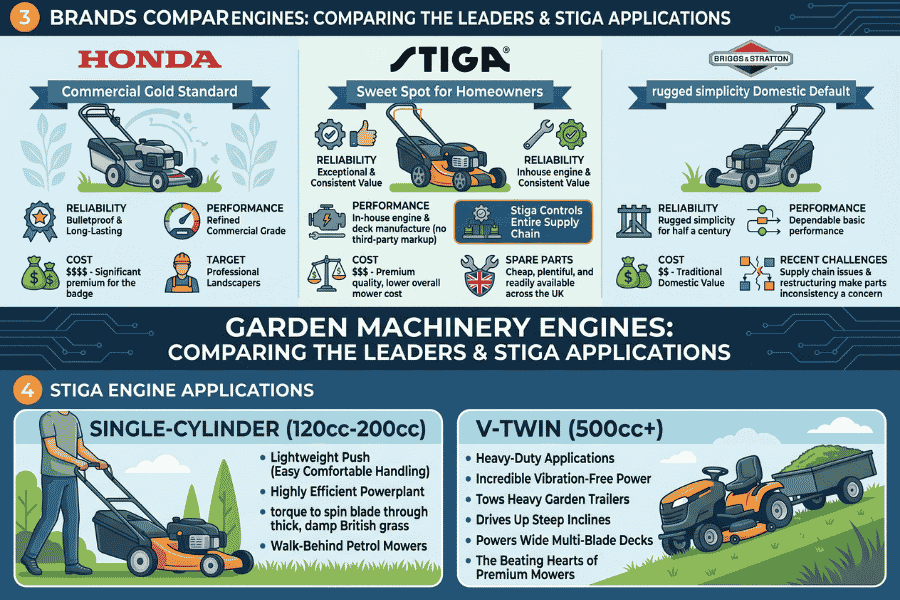
Honda engines are widely considered the gold standard of the commercial landscaping world. They are bulletproof, incredibly refined, and run forever. However, they are also very expensive. If you buy a mower with a Honda engine, you are paying a significant premium for that badge.
Briggs & Stratton has been the default domestic engine for half a century, known for their rugged simplicity. However, in recent years, supply chain issues and corporate restructuring have made parts availability less consistent than in the past.
Stiga engines sit in the perfect “sweet spot” for the vast majority of homeowners. Because Stiga manufactures the mower deck and the engine in-house, there is no third-party markup. You get an engine that performs incredibly similarly to a premium brand, but the overall cost of the mower is kept much lower. Furthermore, because Stiga controls the entire supply chain, spare parts – like air filters, spark plugs, and carburettor components – are cheap, plentiful, and readily available across the UK.
4. Applications: From Push Mowers to Garden Tractors
Stiga does not just make one type of engine; they have developed a comprehensive lineup tailored to different gardening tasks.
Single-Cylinder Engines (120cc to 200cc): These are the lightweight, highly efficient powerplants found on standard walk-behind Petrol Lawnmowers. They are designed to be light enough to push comfortably while providing enough torque to spin the blade through thick, damp British grass without stalling or stuttering.
V-Twin Engines (500cc+): For heavy-duty applications, Stiga produces massive twin-cylinder engines. These are the beating hearts of their premium Ride-On Mowers and front-deck tractors. A V-Twin configuration offers incredible, vibration-free power, allowing the tractor to drive up steep inclines, tow heavy garden trailers, and power wide multi-blade cutting decks simultaneously without breaking a sweat.
5. Maintenance: How to Keep a Stiga Engine Running
Like any mechanical device, the longevity of a Stiga engine is directly tied to how well you maintain it. The good news is that these engines are designed to be extremely user-friendly to service.
To ensure your Stiga engine lasts for a decade or more, you simply need to follow a basic annual maintenance routine. Always check the oil level before every use. At the end of the cutting season, drain the old oil while the engine is warm and replace it with fresh, high-quality SAE 30 lawnmower oil. Clean or replace the paper air filter every 25 hours of use to prevent dust from scoring the cylinder walls, and install a fresh spark plug every spring. Finally, never leave modern E10 petrol sitting in the tank over the winter, as it will degrade, attract moisture, and clog the carburettor.
By following these simple steps, your Stiga engine will provide years of flawless, reliable service.
Conclusion
The garden machinery landscape has changed, and the days of needing a third-party engine to guarantee quality are well and truly over. Stiga has successfully engineered a range of power plants that are robust, efficient, and perfectly tuned for the modern gardener.
By bringing their engine manufacturing in-house, they have managed to elevate the overall quality of their machines while keeping prices accessible. Whether you are buying a compact walk-behind Mountfield or a top-of-the-range Stiga estate tractor, you can have total confidence that the engine under the hood is built to perform and engineered to last.
If you have further questions about engine specifications or if you need help finding the perfect machine for your garden, our team of machinery experts is ready to assist.