In a world of brightly coloured synthetic plant foods and chemical boosters, there is one box that has remained a staple in British garden sheds for generations. It usually has a simple, somewhat old-fashioned design, and the name tells you exactly what is inside: Fish, Blood and Bone.
It may sound gruesome to the uninitiated, but this organic fertiliser is widely regarded as one of the best general-purpose feeds available. It is the secret weapon behind prize-winning vegetable patches and lush herbaceous borders. However, because it is a slow-release organic feed, getting the timing right is critical to seeing results.
At Compass Garden Machinery, we believe that great gardens are built on the foundation of healthy soil. While our rotavators and tillers do the hard work of preparing the ground, it is the nutrients you add that bring the garden to life. Here is your complete guide on when and how to use Fish, Blood and Bone in your UK garden.
The Quick Answer
The best time to use Fish, Blood and Bone is during the active growing season, specifically in spring (March to May) to boost new growth and again in autumn (September to October) to strengthen roots before winter. It is a slow release organic fertiliser, meaning it can take up to six weeks to break down in the soil. Unlike synthetic liquid feeds which give an instant “sugar rush,” Fish, Blood and Bone provides a steady drip feed of nutrients, making it ideal for preparing beds, planting trees, and general soil conditioning.

What Exactly is Fish, Blood and Bone?
As the name suggests, it is a blend of three organic waste products. It was the original way of recycling nutrients back into the earth long before “sustainability” became a buzzword.
Fish Meal: Dried and ground fish waste. This is a rich source of nitrogen.
Dried Blood: A byproduct of the meat industry. This provides a quick-release nitrogen hit.
Bone Meal: Ground-up animal bones. This is high in phosphorus and calcium, which are essential for root development.
Combined, they create a balanced “NPK” fertiliser. NPK stands for Nitrogen, Phosphorus, and Potassium. A typical box of Fish, Blood and Bone has a ratio of roughly 5-5-6. This balance is what makes it such a versatile all-rounder. It promotes leafy growth (Nitrogen), strong roots (Phosphorus), and better flowering and fruit ripening (Potassium).
The Spring Application: Waking Up the Garden
Spring is the primary season for using Fish, Blood and Bone. As the soil warms up in March and April, plants break their dormancy and demand energy.
Preparing Vegetable Beds
If you are growing your own food, this fertiliser is essential. Because it is organic, it improves the soil structure rather than just chemically spiking it.
Timing: Apply it 4 to 6 weeks before you intend to sow or plant out.
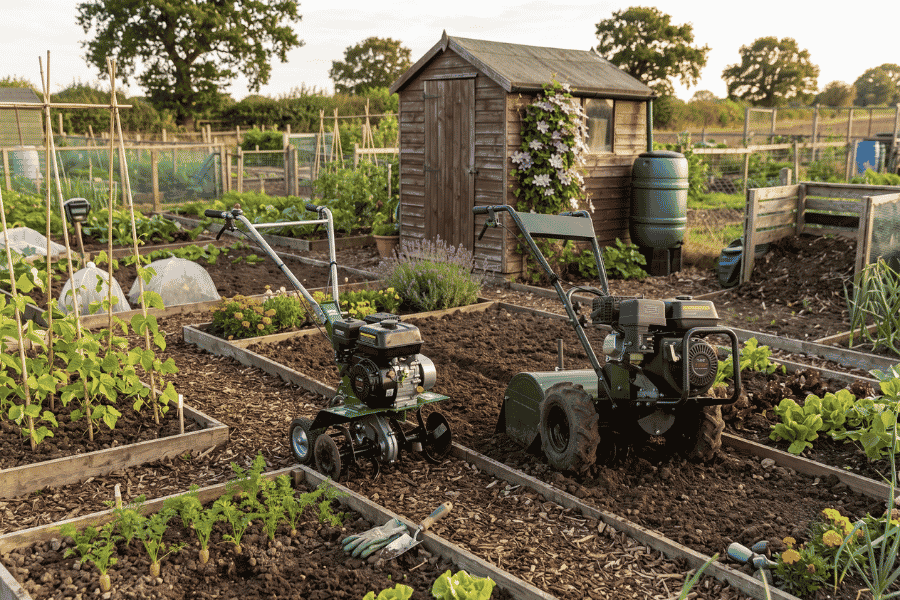
Method: Scatter the pellets or powder over the surface of your vegetable plot. This is the perfect time to use a tiller or rotavator to churn the fertiliser into the top 6 inches of soil. This ensures the nutrients are right where the new roots will need them.
Planting Shrubs and Trees
When planting a new hedge or fruit tree in spring, adding a handful of Fish, Blood and Bone to the planting hole is standard practice. The bone content is particularly valuable here. High phosphorus levels stimulate rapid root establishment, helping the plant anchor itself before the heat of summer arrives.

The Autumn Application: Winter Protection
Many gardeners forget to feed in autumn, but this is a mistake. While spring feeding is for leaves and flowers, autumn feeding is for roots and resilience.
Applying Fish, Blood and Bone in September or October helps plants harden off for winter. The nitrogen content is relatively low compared to synthetic spring feeds, so it won’t encourage soft, sappy growth that would get killed by the first frost. Instead, phosphorus and potassium accumulate in the root system. This ensures that your lawns, shrubs, and perennials survive the cold and bounce back vigorously the following year.
For lawn care, applying it after you have used a scarifier to remove moss can help the grass recover. However, be careful not to overapply nitrogen to lawns late in the year.
When NOT to Use It
Timing is everything. There are specific times when applying this fertiliser is a waste of money or potentially harmful.
1. Deep Winter (November to February) Fish, Blood and Bone requires soil microorganisms to break it down so plants can absorb it. In winter, the soil is too cold for these organisms to work. The fertiliser will simply sit there and eventually wash away in the rain.
2. During Severe Drought, if the ground is bone dry, the fertiliser cannot dissolve and reach the roots. In fact, applying fertiliser to a dehydrated plant can cause “fertiliser burn” and stress the plant further. Wait until rain is forecast, or be prepared to water it in thoroughly.
How to Apply It Safely
Applying Fish, Blood and Bone is straightforward, but it is distinct from using liquid feed.
The Method:
Weed first: Remove any weeds, as they will devour the nutrients faster than your plants.
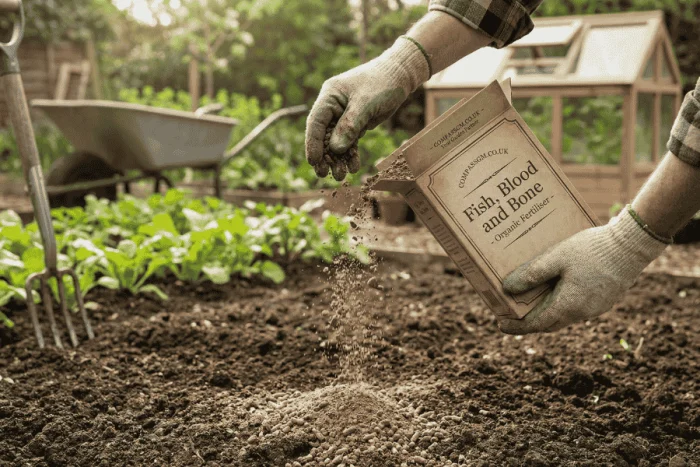
Measure: The standard rate is about 70g per square metre. A gloved handful is roughly 35g to 50g.
Scatter: Sprinkle evenly over the soil surface.
Incorporate: Gently fork it into the soil surface with a hand fork or a hoe. If you are covering a large area, using a broadcast spreader can ensure even coverage.
Water: Water the area well to start the breakdown process.

A Critical Warning: Dogs and Pets
There is one major drawback to Fish, Blood and Bone that every pet owner must know. Dogs love it. To a dog, it smells like a delicious meal.
If a dog eats a large amount of this fertiliser, it can be dangerous. It can clump in their stomach, causing blockages, and the high level of nutrients can cause severe gastric upset.
Safety Tips:
Store the box in a secure, high shed or locked cupboard.
After applying it to the garden, water it in thoroughly until it dissolves into the soil.
Keep dogs off the treated area for 24 hours to ensure the scent has dissipated.
Consider using a vegan alternative (like seaweed meal) if your dog is a persistent digger.
For more detailed information on garden safety for pets, the Dogs Trust offers excellent advice on toxic substances commonly found in sheds.
Why Choose Organic Over Synthetic?
You might wonder why you should bother with a slow-acting powder when you can spray blue liquid and see results in days.
Synthetic fertilisers are like an energy drink. They give a massive boost, but the effects fade quickly, and they do nothing to improve the soil texture. Over time, they can actually harm the beneficial worms and bacteria in your soil.
Fish, Blood and Bone is like a balanced meal. It feeds the soil and the plant. It increases the microbial activity in the earth, which improves drainage and aeration. The Royal Horticultural Society (RHS) supports the use of organic fertilisers for long-term soil health and sustainability.

Summary
Fish, Blood and Bone remains a best seller for a reason. It is economical, effective, and improves the long-term health of your garden. By applying it in the Spring to wake your garden up and the Autumn to put it to bed, you ensure your plants have the nutrients they need exactly when they need them.
Just remember to fork it in well, water it down, and keep the dog away. Whether you are prepping a plot for a new cultivator or just feeding the roses, this classic fertiliser is the professional’s choice.