An overgrown garden can feel chaotic. Bushes that have lost their shape or encroached onto pathways not only look messy but can also block light to other plants and damage the structural integrity of the shrub itself. However, for many homeowners, the idea of taking a powered cutter to a living plant is intimidating. The fear of cutting too much or creating a lopsided disaster is real.
Trimming bushes is not just about aesthetics; it is about plant health. Regular trimming encourages denser growth, prevents the centre of the plant from becoming woody and bare, and increases air circulation.
This guide will walk you through the correct techniques to trim your bushes safely and effectively, transforming a shaggy shrub into a garden highlight.
The Quick Answer
How do I trim a bush correctly? Start by removing the “Three Ds” (Dead, Damaged, and Diseased wood) using sharp secateurs to clear the internal structure. Once the plant is clean, stand back and visualise the shape you want. For formal hedges or box bushes, use a Hedge Trimmer to take off the new growth, moving in a sweeping motion. Always keep the base of the bush slightly wider than the top (a shape known as a “batter”) to ensure sunlight reaches the lower leaves. Finally, gently shake the bush to dislodge loose clippings and do a final tidy-up with hand shears.

Step 1: Safety and Assessment
Before you pick up a tool, you need to prepare the site.
Check for Wildlife: As mentioned in our previous guides, always check for nesting birds. If you find an active nest, you must stop immediately and wait until the chicks have fledged.
Clear the Area: Remove trip hazards like hoses, toys, or large stones from around the base of the bush.
Wear Protection: Sap can be an irritant, and flying debris is a risk. Always wear sturdy gloves and safety goggles.
Step 2: The “Three Ds” (Clean Up)
Do not start shaping the outside until you have fixed the inside. Use a pair of Secateurs or Loppers to remove:
Dead wood: Brittle, brown stems that snap easily.
Damaged wood: Branches that are rubbing against each other or have been broken by wind.
Diseased wood: Stems showing signs of fungus or rot.
Removing these allows you to see the true framework of the bush.
Step 3: Shaping with Power Tools
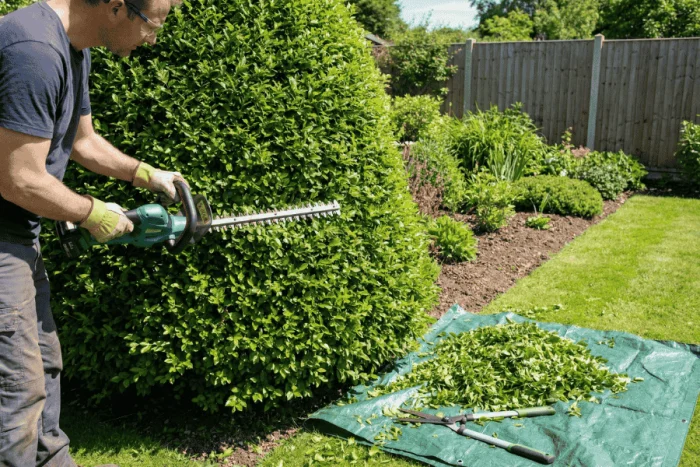
For larger bushes or formal shapes, a powered hedge trimmer is the most efficient tool.
The Technique: Hold the trimmer close to your body for balance. Use a sweeping, rhythmic motion. Do not try to force the blade through thick branches; let the cutter do the work.
The “Batter” Rule: One of the most common mistakes is cutting the top of the bush wider than the bottom. This creates a mushroom shape. The problem with this is that the top growth shades the bottom branches. Eventually, the bottom of your bush will turn brown and die off. Instead, aim for a “Batter.” This means cutting the sides at a slight angle so the base is wider than the top. This allows sunlight to hit the leaves all the way down to the ground, keeping the bush green from head to toe.

Step 4: The Top Cut
Once the sides are done, flatten the top.
The Eye-Level Trick: If the bush is tall, do not guess the height. Use a piece of string tied between two canes as a guide level.
Hand Position: When cutting the flat top, keep the hedge trimmer blade perfectly horizontal. Move it left and right in an arc.
Step 5: The Final Finish
Power tools do the heavy lifting, but hand tools provide the finesse. Put the heavy trimmer down and pick up your hand shears. Look for any straggly leaves or stems that the machine missed. Snip these off individually. Give the bush a good shake. This will dislodge any cut branches that are trapped inside the foliage. If left, these will turn brown and unsightly within a few days.
Dealing with Waste
Trimming generates a surprising amount of green waste.
Composting: Soft, green clippings are excellent for the compost heap as they are nitrogen-rich.
Shredding: Woody stems take a long time to break down. Using a Garden Shredder can turn bulky branches into fine woodchip mulch, which can be put back on the garden beds to suppress weeds.

Conclusion
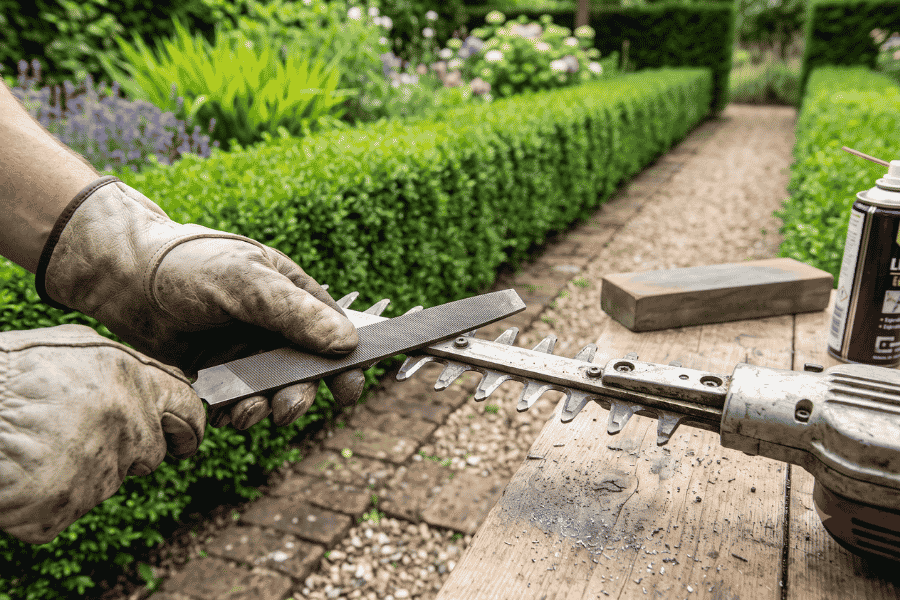
Trimming bushes is a satisfying job that yields instant results. It turns a scruffy garden into a managed landscape. The key is confidence. By following the “wide bottom, narrow top” rule and ensuring your tools are sharp, you can keep your shrubs dense, healthy, and perfectly shaped all year round.
If your current equipment is struggling to cut through thick stems, it might be time for an upgrade. Browse our selection of Cordless Garden Machinery for lightweight, easy-to-use options. For detailed advice on specific plant species, the RHS Pruning Advice pages are a fantastic reference.